
Final thoughts on Iraq
Inshallah

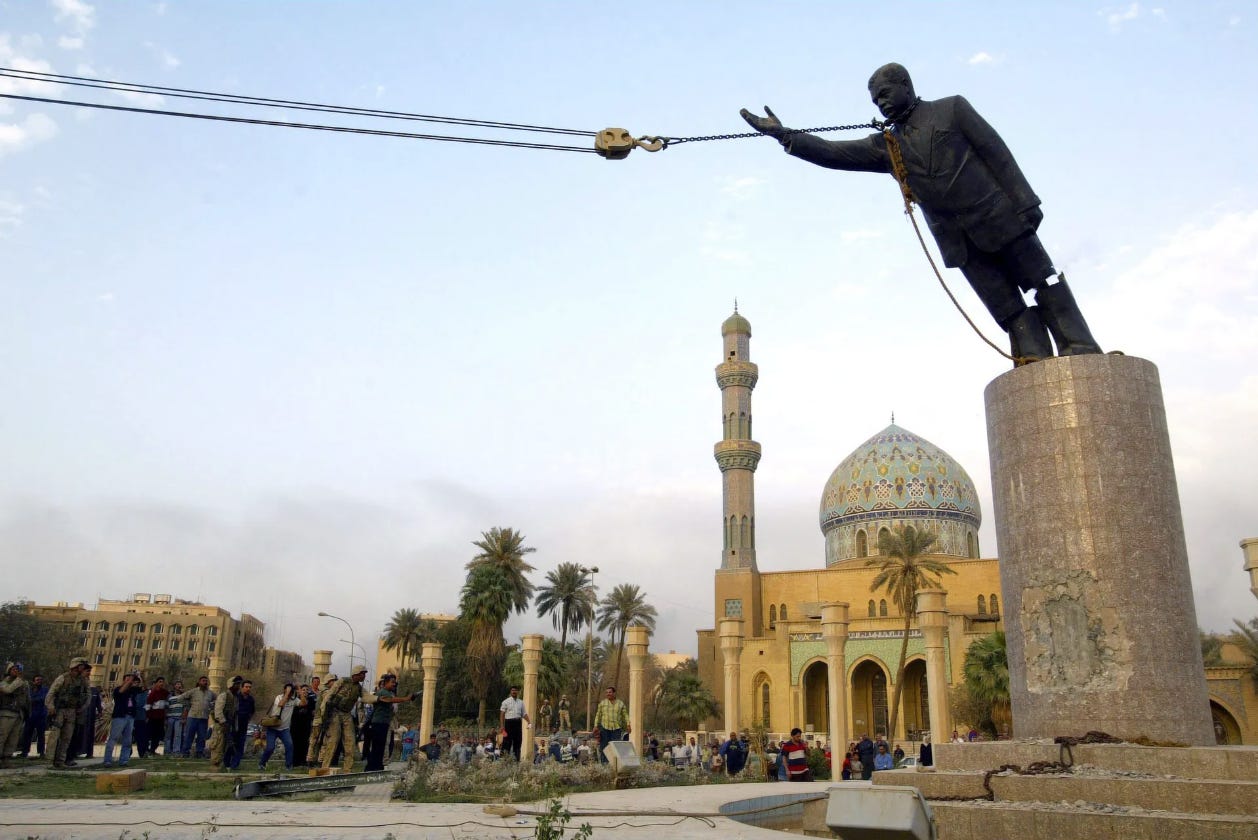
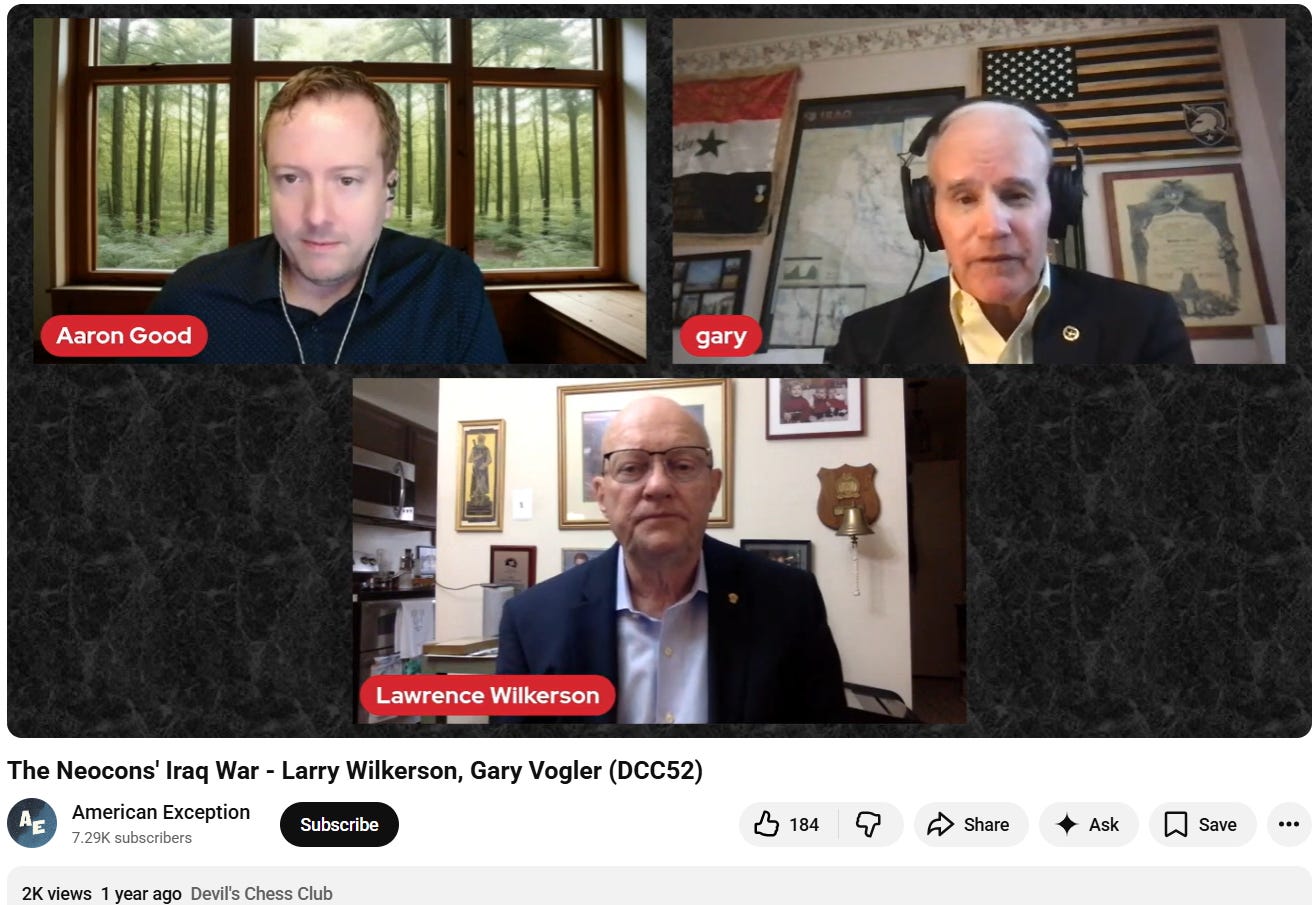
I’ve read quite a lot on the Iraq War, but whenever I think I’m done with the subject or have read all I need to I always end up finding more books or articles to read up on. recently that included Gary Vogler’s Book: Israel, Winner of the 2003 Iraq Oil War and Stephen Sniegoski’s The Transparent Cabal. The latter was nothing new for me and basically just riding the wave of Walt and Mearsheimer’s Israel Lobby (he mentions this and other books that talk about the war via Neocon theory as well as numerous articles so not even that new of territory for him either). The former is much more recent and did have some new info for me primarily focusing on Vogler’s time in the oil sector in post-war Iraq and his view that the war was primarily not just for Israel, but specifically to re-establish and old pipeline from Iraq to Haifa in Israel. According to the author, Israel was in desperate need for a new source of oil following the secret cutoff of Iranian oil in the 90s (apparently had continued covertly after 1979). The pipeline was apparently championed by Douglas Feith and Wolfowitz two of the usual suspects of the Neocon crowd, but also a certain Mike Makovsky who worked in post Iraq oil sector along with Vogler, but apparently just to pursue the interests of Israel and possibly a Mossad agent, at least according to the author. The pipeline never came through, Israel did eventually years later get some oil shipments from Iraqi Kurdistan, but not that much and eventually that source shifted elsewhere as Israel’s energy requirement were met (and I would argue were being met before) from post Soviet countries (and also is a net producer of natural gas now). Essentially Vogler points to this singular pipeline as the whole reason for the Iraq War…a single pipeline…and he goes on to be interviewed by weird Youtube personalities like Scott Horton and collabs with none other than Lawrence Wilkerson, former Chief of Staff to Colin Powell at the time of the war, also on the weird side of conspiratorial Youtube. It’s difficult to necessarily “debunk” Vogler’s point as he hardly goes into any pre-war planning or back and forth argumentation pre invasion like so many other authors and researchers have done (think Bob Woodward, Robert Draper, Michael Mazar, even those I don’t agree with like Walt, Mearsheimer, and Sniegoski). At most he just talks about how Ahmed Chalabi promised the Neocons that this pipeline would be built (doesn’t mention Chalabi also promising things to oil companies or working with the Iranians which by his logic would also mean it was a war for oil and Iran presumably, but I digress). To put it bluntly, I don’t believe Vogler’s book is that insightful beyond giving his perspective on post war Iraqi oil politics (one could probably learn a lot more from Greg Muttitt’s book Fuel on the Fire for a more broad based view on oil politics in post war Iraq…certainly doesn’t take the myopic view of Vogler that it was really all just about Israel including the idea that the attacks on oil infrastructure were all just because Iraqis didn’t want Jews to get their oil). I bring up these two books because I wanted to see if I was missing anything with the whole war for Israel/Neocon theory, but after reading them I am left with just the same feeling I get when I deal with various JQ topics: a singular myopic focus on one topic or group without any other major players or context. To his credit Sniegoski doesn’t just blame Jewish neocons and mentions others like Bolton, Woolsey, or Bruce Jackson and Vogler even gives credence to a book blaming the Iraq war for Bush Jr.’s desire for vengeance (can be found in chapter 1 of his book talking about John Nixon, the author…I think Vogler has a penchant for simplistic explanations to be honest), but overall the two writers, in their own different ways and methods, fall back on the same shallow thinking (and oftentimes downright erroneous or bizarre) that overinflates the importance of neocons to the discredit of other actors and theories. This write up is not going to be a full debunk or even full review of these books (although alot can be said particularly about Sniegoski’s views that neocons dominated WMD talking points, something that I have dealt with before and will explore here, as well as his odd points about Israel including bizarre points that the expulsion of Palestinians from Kuwait somehow helped Israel (pg 48 of his book) after Palestinians largely sided with Saddam… they really know how to pick em…and another point about how Bush Sr, known for not being super pro Israel, actually fought Saddam in Gulf War 1 to appease Israel and not to protect Saudi Arabia and no mention of people like Bandar bin Sultan who had direct access to the top US officials and war plans at the time, but I digress again). Rather, these two books just once again bring up the same kind of thinking that I hoped to discredit with my previous works on the topic and this write up will hopefully consolidate most of the talking points I have made on the matter (whether from my videos on Walt and Mearsheimer or GDF or my previous substack article) and whatever new information I have garnered from my last spree of Iraq war learning.
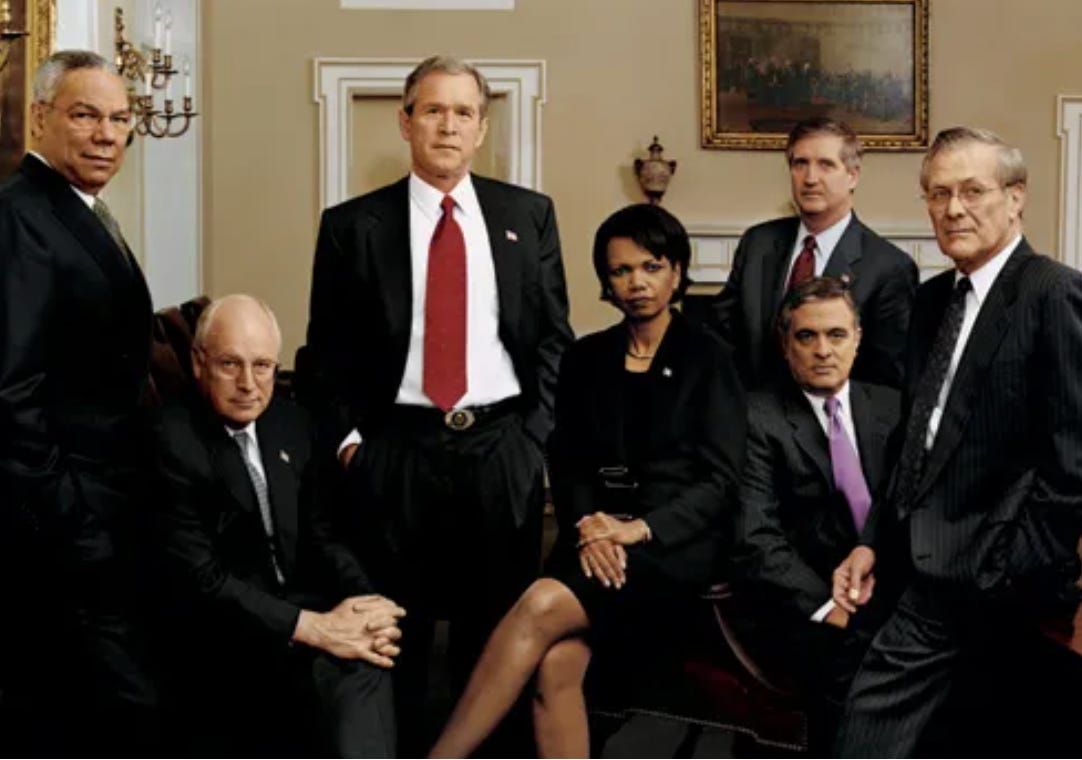
First, let’s point to the obvious; none of the top administration officials were Jewish and/or neocons. Both Cheney and Rumsfeld, having worked with some of the J Neocons in the past, were in fact the ones who hired them on to work in the Bush administration having known their positions on Iraq and broader foreign policy from working with them previously (Cheney and Wolfowitz worked together in the Bush sr. administration, Rumsfeld and Wolfowitz working in the Reagan administration together, all being involved in PNAC, etc). Cheney especially was prominent in this decision making process.1 This just to say that these men knew who they were bringing on to the administration and were not duped in any way which leads us to Bush. Bush, while being a bit naive, was not some totally aloof person either and at the very least had a personal beef with Saddam along with viewing Iraq as a top priority for his new administration in talks with Clinton during the transitionary meeting between the two presidents.2 Powell, oftentimes seen as a dove, was not so, but just more into unilateralism and getting the international community involved, but in principle not against war.3 Rice, while not playing a huge role also was not avoidant of war and largely followed the lead of the President and advocated the pre-emptive war strategy in her office’s National Security Strategy paper.4
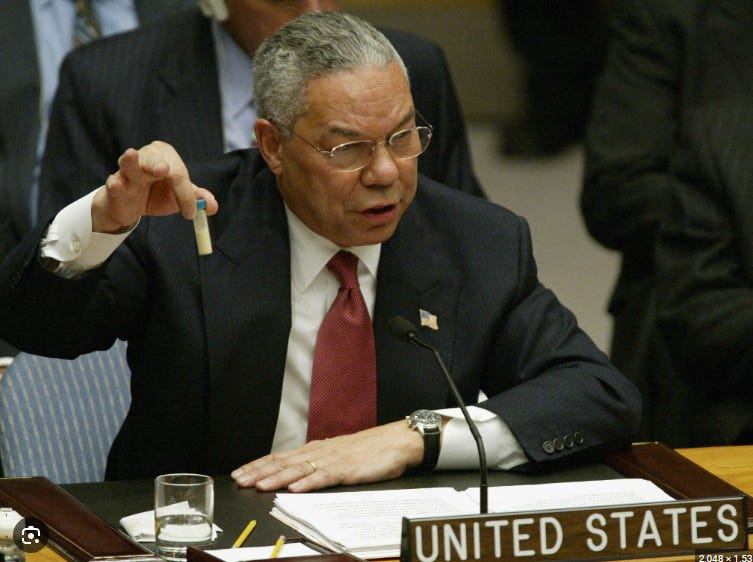
In terms of intelligence surrounding Iraq, the Neocons in the administration working in the Office of Special Plans (OSP) largely focused on Saddam’s supposed links to AQ and did not focus as much directly on WMD (while largely believing that he had WMD programs as everyone else did which I will get to). There was an ongoing effort to push AQ connections with Saddam, but to no avail ultimately. Powell refused to use any of these talking points in his now famous UN speech from neocons like Scooter Libby opting only for those accepted by the CIA in terms of WMD and terrorist connections like Zarqawi.5 The CIA specifically had a rocky relationship with the neocons and dismissed a lot of the intel that people like Wolfowitz and Feith used to push AQ ties with Saddam talking points increasing the rift between the two groups.6 These talking points were still useful in selling the war so to speak to the American public7 and in fact the US population was pretty gung ho on war generally after 9/11 and leading up to the 2003 invasion due to this threat inflation, but also just due to the events of 9/11 itself as well.8 Ultimately the issue of WMD was the main rallying cry around the reason to go to war with the CIA and State Department never really convinced about any solid AQ connections to Saddam and WMD being seen as the “one issue everyone could agree on”.9 This agreement was able to be made because virtually everyone believed Saddam did indeed have some sort of WMD program. George Tenet, head of the CIA certainly believed so and told Bush that it was a “slam dunk” case10 and even after seemed incredulous at David Kay’s non findings of any WMD in post war Iraq in 2004.11 His deputy John Mclaughlin believed the same, various intelligence agencies of different countries and Arab leaders also had the same opinion that Saddam had WMD programs12 with King Abdullah II of Jordan telling General Tommy Franks that he believed the Iraqis were hiding chemical and biological weapons and Hosni Mubarak telling him that Saddam would use biological WMD on American troops calling the Iraqi leader a “madman”.13 Added to this is what author Ron Suskind called Cheney’s “1% Doctrine” where any threat even if a minuscule chance of coming to fruition must be taken as probable and dealt with as if it was a sure thing (this was first spoken about in regards to Pakistani scientists possibly working with AQ to get nukes, but extrapolated from there to other issues and actors).14 This was not helped by the Anthrax attacks that happened shortly after 9/11 which were not readily solved and had a huge effect on Cheney15 and previously the administration had prepared for Bio weapons attacks on the country with Operation Dark Winter so it was as if their worst fears had, to a small degree, come true (the anthrax attacks years later found to be from a single individual in the states, but some controversy over the investigation). Cheney also had a sense of “unfinished business” with Saddam, having believed he would be overthrown after Gulf War 1, but after that didn’t happen felt it was a mistake to have left him in power and wanted to rectify that error.16 Rumsfeld as well had a fairly cautionary take on foreign threats and in the late 90s published a commission to counter the CIA NIE downplaying of missile threats from other countries ultimately being proven somewhat right when various foreign actors launched unprecedented nuclear tests and missile launches (India and Pakistan the former and North Korea the latter) which surprised US intel agencies catching them off guard.17 This skepticism of the CIA was nothing new to Rumsfeld or Neocons in general as they had a similar reaction to the supposed downplaying of the Soviet threat by the CIA in the 1970s creating a “Team B” to analyze the CIA’s “Team A” NIE analysis of the USSR threat.18 Saddam also did not help with the confusion over WMDs having once had an active WMD program that was destroyed after Gulf War 1, but surprised many by its scope, as well as making it appear that Iraq had WMD mainly to thwart regional rival Iran (see the Duelfer Report summary for more on this also while pre war inspections did take place inspector Hans Blix did remark that Iraq’s response to inspections were lackluster just adding fuel to the fire of suspicion). Lastly, in terms of WMD all of the main points about the supposed WMD program of Saddam, the CIA did not rely on Neocon or OSP intel for the main issues. Curveball, the supposed defector who spoke about mobile bioweapons, was plucked out of German intelligence and mainly questions by DIA officials. The Aluminum tubes story was mainly pursued by CIA official Joe Turner19 and the Niger Yellow Cake factoid was originally manufactured by Italian intelligence and in conjunction with the British White Paper on the topic was included in Bush’s 2003 State of the Union speech at the behest of Alan Foley and Robert Joseph.20 (also see famous 16 words).
Another thing to point out is when people talk about Neocons they mainly are talking about Jews, however there is almost always a gentile counterpart one could name drop. For instance, many will bring up PNAC, the Clean Break memo, the Defense Planning Guidance of 2002, Rebuilding America’s Defenses, etc. but all of these organizations or papers or what have you had non Jewish involvement (with the exception of the memo but that was essentially a letter to Netanyahu from some American Neocon Jews to promote the Jordanian king as possible ruler of Iraq and didn’t focus on Iraq all that much also advocated for no more US aid to Israel among other things). The DPG of 1992 was written primarily by Zalmay Khalilzad (Afghani from Muslim background who was a collaborator with Wolfowitz on overthrowing Saddam) who remarked that Cheney told him that the document “gave us a new role in the world”.21 Rebuilding America’s Defenses was a paper produced by PNAC largely written by Thomas Donnelly (Now Giselle so a trans gentile) with the project co-chaired by Donald Kagan and Gay Schmitt (the former Jewish the latter not so). Bruce Jackson was the director of PNAC and had ties to Lockheed Martin. In fact many individuals with ties to both PNAC and Lockheed were involved directly in the Bush administration, most of whom non Jews.22 (Just odd that Likud connections to certain Jewish Neocons get highlighted but connections to weapons manufacturers are often not. Not to mention Cheney ties to Haliburton and other obvious business interests involved with oil infrastructure and contract work that people like Naomi Klein in her book Shock Doctrine discuss). The Committee for the Liberation of Iraq was also staffed by many with ties to the arms industry such as retired General Barry McCaffrey, Republican donor Julie Finley, and later advisor to John McCain, Randy Scheunemann (none of whom Jewish) as well as others.23 People also point out certain think tanks that helped push the war like AEI which certainly did have a Neocon bent, but others were cited more that, while more moderate, did at the end of the day advocate for some military invasion such as Brookings Institute staffed by Kenneth Pollack (non Neocon Jew) and Mark O’Hanlon (non Neocon gentile). I don’t have time to do a full breakdown of every person in every think tank and no doubt alot of prominent Jews were involved, but looking at these data sets one can see that the more hawkish think tanks didn’t totally dominate the arena and there was plenty of different types of think tanks involved in the media and congressional testimonies (this is not to say PNAC didn’t have an outsized role due to members of it were directly involved in the administration)
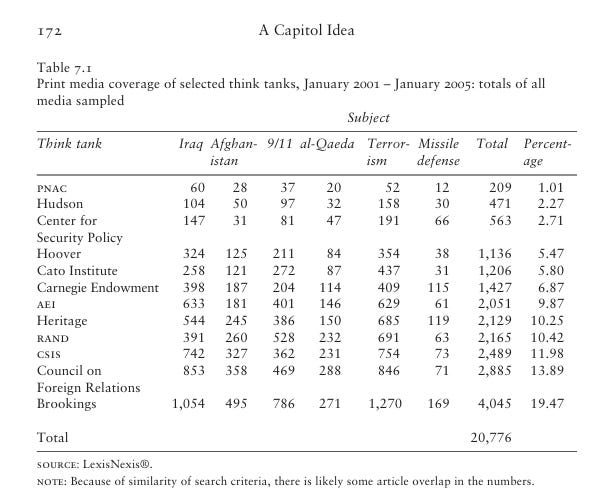
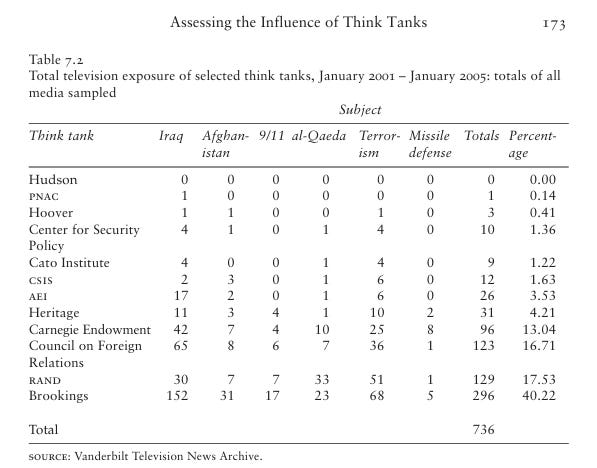
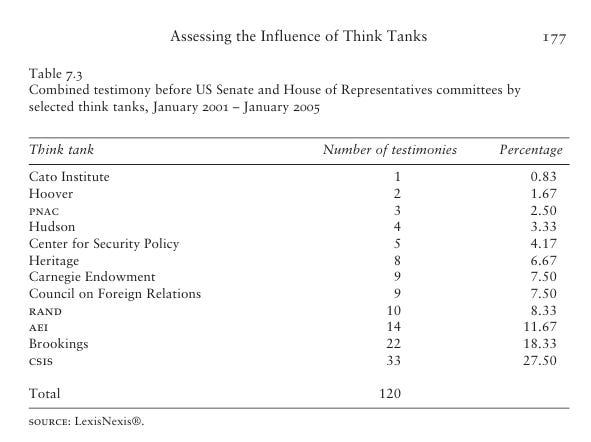
In terms of journalists and reporters Judith Miller is often cited as one Jewish reporter with ties to the Neocons. This is obviously factual, but others abound such as Jim Hoagland who early on had a relationship with Ahmed Chalabi and wrote pieces against Saddam since the late 90s and was one of the first to suggest that Saddam had a hand in the 9/11 attacks (Not Jewish…also the idea of blaming Saddam for these types of attacks was not unheard of about a week later James Woolsey suggested Saddam may have been behind the anthrax attacks). Other pro Iraq War journalists include David Ignatius and Lally Weymouth (non Jews) where some Jewish journalists like Walter Pincus were more skeptical of Iraqi complicity and the push to war.24 Again quite difficult to tally all of the reporters during this time and frankly many anti war populists of today like Carlson or Coulter were pro war back then and most people were in the post 9/11 patriotic fervor. (One person I can’t figure out if Jewish or not is Laurie Mylorie, quite an interesting figure was pro Saddam at one point, but later fiercely anti Saddam and worked with Daniel Pipes, but later falling out. She was well known for her Saddam conspiracies). With public intellectuals the same arguments can be made. Writers like Sniegoski will point to historians like Bernard Lewis, but miss others like Victor David Hanson who NYT columnist Maureen Down dubbed Cheney’s “war guru” (both men met with Cheney personally pre-war along with columnist George Will).25
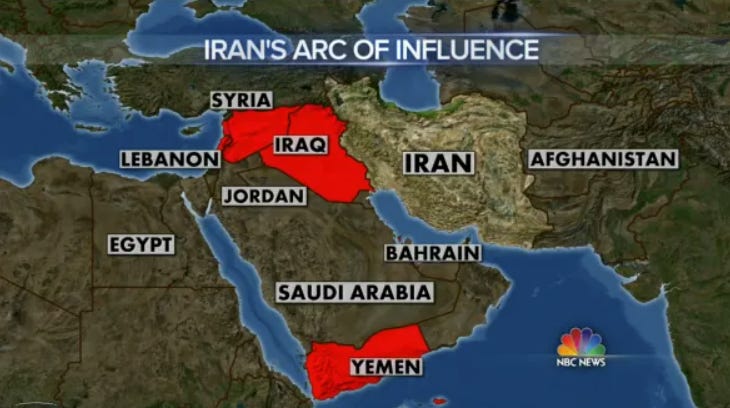
Specifically looking at War for Israel theory, this is usually supported by Netanyahu’s testimony to congress, Likud links to Neocons, and general statements from some in Israeli intelligence and politics (See Sniegoski’s book for examples of this). This has been addressed quite a bit from publications like The Forward that show Sharon was more tepid in his response to the war. Martin Indyk ambassador to Israel said he heard nothing about Iraq more about Iran26 and a similar sentiment is shared by Richard Haass in his book War of Necessity War of Choice.27 Even Larry Wilkerson quoted by Jonah Goldberg stated The Israelis tried their best to persuade us that we were focused on the wrong enemy,"[…] and that they were very leery of destroying the balance of power in the Middle East. But once they understood that we were going to war, come hell or high water, they weren't going to get on the wrong side of the president of the United States”. If want to read more on this issue I would recommend Stephen Zunes article here where he shows that not only did certain Israeli officials not encourage war, but also downplayed the threat from Saddam and shows that Iran was ultimately the winner of the Iraq war establishing a Shia crescent that lasted roughly to the present (except far more in shambles now than in the 2000s or 2010s). This article also does a decent job rebutting this point quoting an Israeli Lt. General that he “doesn’t lose sleep” over the threat of Saddam among other statements. It is interesting how Iran was eager to see Saddam ousted and worked with Chalabi ultimately gaining strategic influence in the region, but nobody would be foolish enough to say it was a “war for Iran” (even though Iran and Iraq had a bloody decade long conflict). And most don’t categorize Gulf war 1 as a “war for Saudi Arabia” certainly not Gulf War 2 even though Bandar Bin Sultan was active and extremely close to top US officials in both wars, actively lobbied for both, and even heard about plans to invade before Powell! (according to Bob Woodward’s book Plan of Attack). As well as plenty of anti Saddam sentiments coming from Saudi royalty and officials (see Louisa Dris-Aït-Hamadouche and Yahia H. Zoubir article here) …just asking for consistency.
Proponents of war for Israel/Neocon theory also suggest that Neocons basically had free reign in the administration and that everything was just at their behest including taking a whole nation to war. This is not what the record shows. Everything from the timing of the war, the army mobilization, and post-war planning were certainly not just given over to the Neocons. I’ve already discussed CIA/State Department dismissal of Neocon talking points on AQ and Powell’s refusal to use those talking points in his UN speech. Robert Draper dismisses the idea that Paul Wolfowitz was somehow the “architect” of the war.28 Wolfowitz urged to go after Saddam right after 9/11 using his “enclave strategy” (not really his strategy, but more General Wayne Downing which was somewhat similar to the plan for the Anabasis project in which the CIA led by John Maguire were to infiltrate Iraq and topple Saddam following failed coup attempts in the 90s).29 Bush did not follow Wolfowitz lead and instead opted for a later time to deal with Saddam specifically stating “we will get this guy but at a time and place of our choosing”.30 The enclave plan was also more or less shut down right away being seen as not realistic as well as the idea of forming a provisional government in exile led by Chalabi. Both CENTCOM and the State Department disagreed with these policies and so they did not happen.31 aides to Doug Feith were also shut out of the CENTCOM planning team after they annoyed the CENTCOM officials too much with their insistence on lowering troop levels, something that Rumsfeld had been advocating for.32 It seems that if anything alot of the Neocons were just seen as a nuisance with General Tommy Franks calling Feith “the stupidest fucking guy on the planet”. Regardless of their personal opinions of the Neocons here is a good chart from Cramer and Duggan’s article “In Pursuit of Primacy” in the Collection Why did the United States Invade Iraq? page 225 (ed. by Cramer and Thrall).
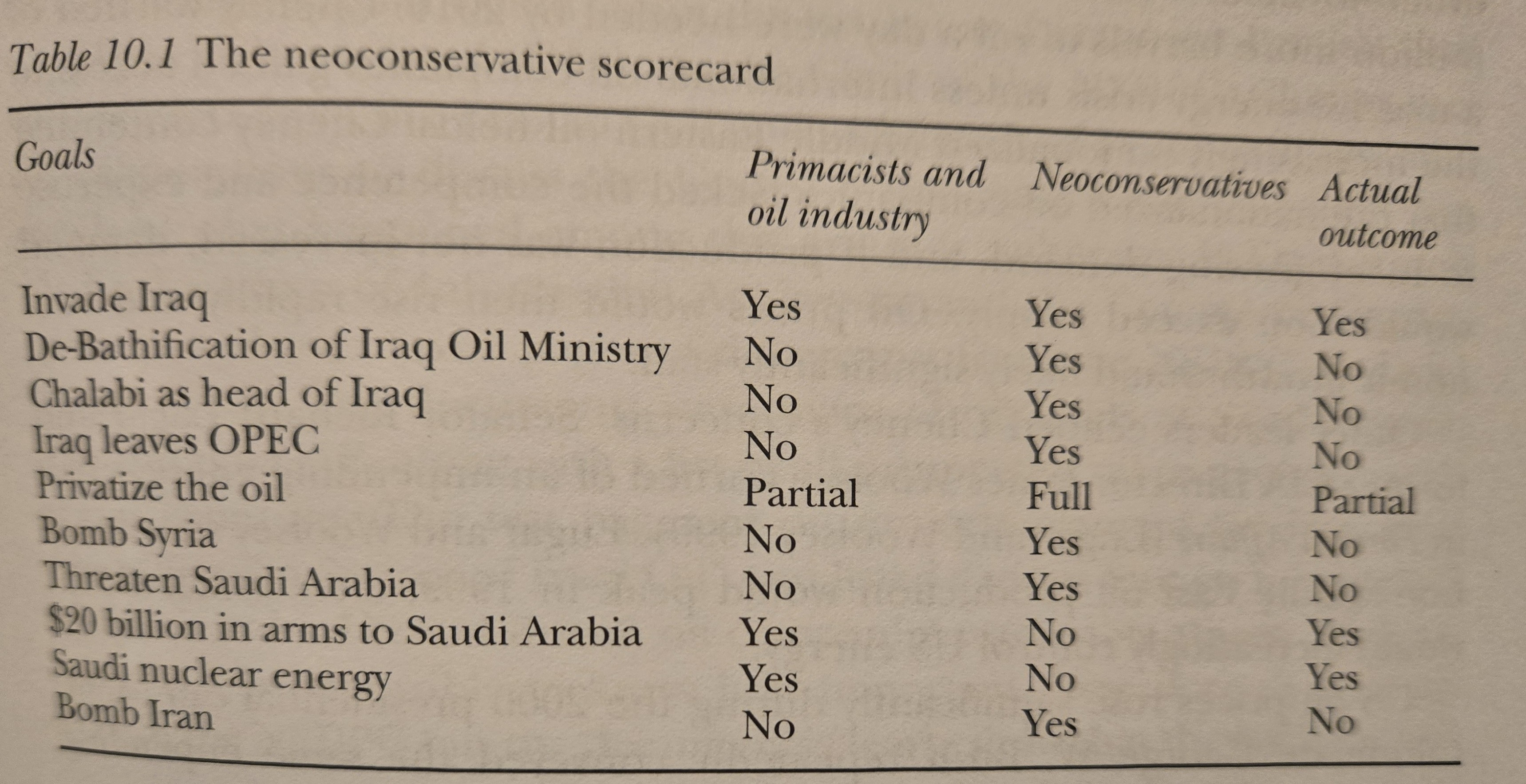
The anti Saudi position is quite interesting not only because obviously the Neocons were not going to derail such a powerful force from US foreign policy (the Bushes had a long history with the Saudis see House of Bush House of Saud by Craig Unger), but also because they teamed up with a follower of Lyndon Larouche to try and do so. Also Norman Finkelstein points out that the neocons were largely out of the administration by 2006 so any blame assigned to them for further actions Bush took at the end of his second term can’t really be assigned to them at all.33 Not to mention no direct military action was taken against Syria and Iran anyways and the main policy decision that was pursued was the surge in Iraq in 2006, but this was mostly a policy influenced by people like Jack Keane and Meghan O’Sullivan. (Not to mention the contemporary fall of Assad’s Syria had little to do with any Neocon machinations or Israel, but rather Sunni states like Saud Arabia and Turkey…not everything in the Middle East is just about Jews there are other actors involved). Also one can just look at quotes from various officials from the time who disagree with such a hypothesis that the war was for Israel/Neocons with Peter Wehner, former deputy assistant to the president and director of the White House Office of Strategic Initiatives, calling Walt and Mearsheimer’s Israel Lobby thesis “ludicrous”34 and Rumsfeld himself, in jest, saying that “the President and the Vice-President and myself and Colin Powell just fell off a turnip truck to take these jobs” in response to the Neocons dominating foreign policy in the Bush admin.
Many theories abound over why the Iraq war happened ranging from Bush wanting vengeance to varieties of the war for oil argument (Michael O’klare and John Duffield are good examples of nuanced views on this) to Richard Hanania’s Public Choice Theory of elite decision making to arguments over US hegemony post Cold War to legitimate security fears and threats to even more broad based theories of why states go to war etc. etc. etc. Paul Harvey in his book, Explaining the Iraq War, makes a counterfactual argument the even if Gore had won the decision to invade Iraq would probably still have been made given Gore’s probably advisors (some Jewish some not none of whom were Neocons), US public opinion post 9/11, Gore’s own sentiments, etc. It’s an interesting thought experiment and, while obviously can’t be proven, is useful in countering war for Neocon theory. The conclusion of the book offers several reasons why Neocon theory is so popular: 1) It helps cover the tracks of those who initially were supportive of the war, but later saw that it did not go over so well (in this case Gore). 2) Giving thoughtful and more complex explanations of reasons for war often sounds like an apologetic for the war itself i.e. Saddam was a bad person and acted somewhat erratic giving officials reason to be skeptical about WMD. 3) Neoconist models are simpler to understand and therefore are more appealing. 4) Journalists like the small sound bites and easily reductionist topics that can fit in an op-ed (a bit ironic considering that’s how a lot of journalists who were pro Iraq war probably felt as well). 5) People become entrenched to their long held beliefs (think Walt and Mearsheimer…they can’t really change their minds and in fact have double downed even after a lot of decent criticism). 6) Usually when one makes a case for a certain theory they use all evidence in support of that theory and dismiss others or ignore. 7) Various reasons why scholars, if not segments of the public, bandwagon on certain theories. In sum, Harvey explains that the Neoconist theory is easier to explain and digest and therefore will be chosen over more complex explanations.35
Another book I recently skimmed over was Confronting Saddam by Melvyn Leffler. Leffler writes that that the angst over 9/11 along with other attacks like anthrax really did elevate the sense of fear and security issues which ultimately lead to Saddam’s ousting. I would recommend these two articles here and here for quick summaries.
I think all of the theories surrounding the Iraq war have something to contribute (even the Neoconist one…not so much the war for Israel directly, but that’s fine). Oil is practically the only reason the region is important at all, Saddam’s history and behavior with the US and other countries in the region, certain ideological bents deriving from the post Cold War milieu as well as grappling with more modern armies and military technology, etc. all combined with fears around terrorist attacks deeply heightened by 9/11. This combination created a perfect storm for some kind of attack that just a focus on Afghanistan would not do (one senior official told Peter Baker that “the only reason we went into Iraq…is we were looking for somebody’s ass to kick. Afghanistan was too easy”.36 A combination of US hegemony/primacy joined at the hip to Neocons (as explained by Duggan’s thesis or Cramer and Duggan’s contribution to the collection of papers in Why did the United States Invade Iraq? book as well as legitimate fears in the 9/11 climate. I would point to the article by Joseph Stieb entitled “Why did the United States Invade Iraq? The Debate at 20 Years in the Texas National Security Review as a good summation of this thesis. US Hegemony combined with security concerns essentially using Neocon language as a veneer and a way to sell the war.
So overall the hyper focus on Neocons is just that. A Myopic hyper focus that highlights Jews to the exclusion of others (most of the time at least) and is a good precursor to broader JQ discourse in that same vein. One needs to have a broad based perspective on all the actors and giving everyone the agency that they are due and not just focus on the ones that others have been gone over ad infinitum.
Postscript: I forgot to mention a couple other odd things in Sniegoski’s book like his claim that Bush Sr. lost re-election because of a shift in the Jewish vote (apparently less Jews voted for him second time around even though both times he got a minority of the Jewish vote anyway because he was Republican) with no mention of other factors (people often point to Ross Perot taking votes away from him among other things). Just another factoid of hyper focus on Jews. Also former Congressman Paul Findley does an Foreword in the book where he more or less blames the Israel Lobby for getting him ousted from Congress. Stephen Zunes looks at this issue and is worth taking a look at.
Peter Baker, Days of Fire (Anchor Books, 2014), 79-80.
Michael Gordon and General Berdanrd E. Trainor, Cobra II (Pantheon Books, 2006), 13-14.
James Mann, Rise of The Vulcans (Penguin Books, 2004), 342, 366.
Ibid., 367.
Michael Isikoff and David Corn, Hubris (Crown Publishers, 2006), 176-181.
James Risen, State of War (Free Press, 2006), 73.
Shaping Public Opinion: The 9/11-Iraq Connection in the Bush Administration's Rhetoric by Amy Gershkoff and Shana Kushner Perspectives on Politics Vol. 3, No. 3 (Sep., 2005) pg 525.
Frank P. Harvey, Explaining the Iraq War (Cambridge University Press, 2012), 181-185. Also see article: Freedman, L. (2004). War in Iraq: Selling the Threat. Survival, 46(2), 7–49. https://doi.org/10.1080/00396338.2004.9688597
George Tenet, Center of the Storm (HaerperCollins, 2007), 321.
Ibid., 331.
Risen, 122.
Donald Rumsfeld, Known and Unknown A Memoir (Sentinel, 2011), 434-435.
General Tommy Franks, American Soldier (HarperCollins, 2004), 418-419.
Ron Suskind, The One Percent Doctrine (Simon & Schuster, 2006), 62.
Stephen F. Hayes, Cheney (HarperCollins, 2007), 356-358.
Gordon and Trainor, 39-40.
Rowan Scarborough, Rumsfeld’s War (Regnery, 2004), 100-104.
Gary Dorrien, Imperial Designs (Taylor & Francis, 2004), 50-53.
hubris 37-41.
Isikioff and Corn, 170-172.
Zalmay Khalilzad, The Envoy (St. Martin’s Press, 2016), 81-82.
William D. Hartung, Prophets of War (Nation Books, 2012), 192-193.
Ibid., 209-211.
Robert Draper, To Start a war (Penguin Press, 2020), 289-291.
Isikoff and Corn, 159.
Ibid., 77.
Richard Haass, War of Necessity War of Choice (Simon & Schuster, 2009), 207.
Draper, 49.
Isikoff and Corn, 6-12.
Gordon and Trainor, 17.
Ibid., 107.
Ibid., 45.
Norman Finkelstein, Knowing Too Much (OR Books, 2012), 79.
Ben Fishman, The ‘Israel Lobby’: A Realistic Assessment, Orbis, Volume 52, Issue 1, 2008, 178.
Harvey, 290-293.
Michael Mazarr, Leap of Faith (PublicAffairs, 2019), 158.